
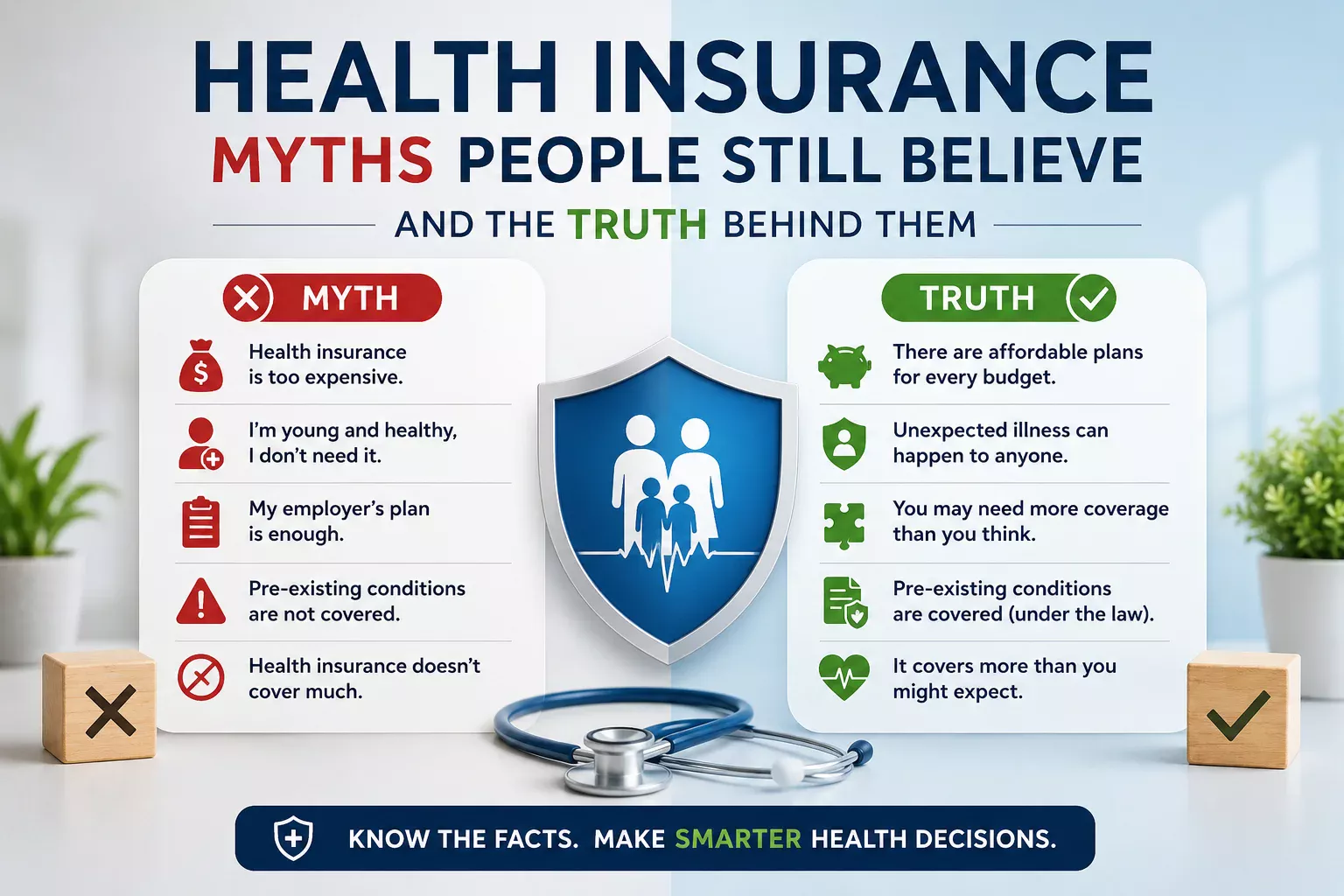
One of the most crucial financial instruments you’ll ever use is health insurance, but it’s also one of the most misinterpreted. Millions of people make expensive decisions based on out-of-date or blatantly incorrect information, from believing your employer’s plan is always the best value to assuming you don’t need it while you’re young and healthy.
These fallacies do more than simply confuse people. They result in unanticipated medical expenses, lost benefits, and coverage gaps that might negatively impact your budget. In order to help you make better, more educated decisions regarding your coverage, we dispel the most prevalent health insurance myths that are still in circulation today.
Myth #1: “I’m Young and Healthy, So I Don’t Need Health Insurance”
Of all the myths, this one is arguably the most damaging. Why pay monthly premiums for something you never use makes sense. The issue is that nobody intends to become ill or hurt.
Depending on the course of therapy, a single ER visit may cost anywhere from $1,500 to more than $10,000. A car accident, a sudden case of appendicitis, or a shattered limb don’t determine your age before they occur. You are just one bad day away from incurring significant medical expenses if you are uninsured.
In actuality, health insurance is not limited to those who are ill. It serves as a financial safety net to shield you from unforeseen, expensive situations. Emergency protection, mental health services, and preventive treatment are beneficial even for a healthy 25-year-old.
Myth #2: “Health Insurance Covers Everything After I Pay My Premium”
Many policyholders think that all medical expenses are covered once they enlist. This is one of the most common myths about health insurance, and it’s also one of the most costly to learn the hard way.
The majority of health plans include many cost-sharing tiers:
| Cost Type | What It Means |
|---|---|
| Premium | Monthly payment to maintain coverage |
| Deductible | Amount you pay before insurance kicks in |
| Copay | Fixed fee per visit or service |
| Coinsurance | Your percentage share after the deductible |
| Out-of-Pocket Maximum | The cap on what you’ll pay in a year |
Some treatments — particularly elective procedures or experimental therapies — may not be covered at all. Always read your Summary of Benefits and Coverage (SBC) document carefully.
Myth #3: “The Cheapest Plan Is the Most Affordable Option”
It feels logical: lower monthly premium = more money in your pocket. But this thinking ignores a critical part of the equation — your total annual healthcare costs.
Low-premium plans almost always come with higher deductibles, higher copays, and narrower provider networks. If you have even a moderate health need during the year, what you save on premiums can easily be wiped out — and then some — by higher out-of-pocket costs.
How to compare plans properly:
- Estimate your typical annual healthcare usage
- Add up premiums + expected deductible + copays
- Compare that total across plan options, not just the monthly rate
- Factor in whether your preferred doctors are in-network
Myth #4: “My Employer’s Plan Is Always the Best Choice”
Many employees assume their workplace plan is automatically the right fit — after all, the employer pays a portion of it. But employer-sponsored plans vary enormously, and they may not align with your personal healthcare needs.
If your employer offers a high-deductible plan, you might actually save more by shopping on the Health Insurance Marketplace and applying for subsidies — especially if your household income qualifies. There is no law that forces you to enroll in your employer’s plan.
Consider comparing your employer plan against marketplace options if:
- Your income qualifies for Affordable Care Act (ACA) tax credits
- Your employer’s plan has a limited provider network
- Your plan doesn’t cover specialists or medications you regularly use
Myth #5: “Pre-Existing Conditions Mean I Can Be Denied Coverage”
This myth was once true — but it hasn’t been since 2014. Under the Affordable Care Act (ACA), insurance companies are legally prohibited from denying coverage or charging higher premiums based on pre-existing conditions such as diabetes, asthma, heart disease, or cancer.
Whether you’re buying through the marketplace or through an employer, your health history cannot be used against you in any plan that falls under ACA regulations.
The truth: You have the right to comprehensive coverage regardless of your medical history. If someone tells you otherwise, verify your rights directly at HealthCare.gov or with a licensed insurance broker.
Myth #6: “Health Insurance Is Only for Physical Illness”
This outdated belief leads many people to avoid seeking mental health treatment, assuming it won’t be covered. In reality, the Mental Health Parity and Addiction Equity Act (MHPAEA) requires most health plans to cover mental health and substance use disorder services at the same level as physical health services.
Most modern health plans cover:
- Therapy and counseling sessions
- Psychiatric evaluations and medication management
- Substance use disorder treatment
- Behavioral health programs
If you’ve been avoiding mental health care because you assumed it wasn’t covered, it’s worth calling your insurer to review your actual benefits.
Myth #7: “Health Insurance Doesn’t Cover Preventive Care”
Many people avoid annual checkups, screenings, or vaccines because they assume they’ll face a bill afterward. Under the ACA, most health insurance plans are required to cover a wide range of preventive services at zero cost to you — no copay, no deductible.
Preventive services typically covered at no cost include:
- Annual wellness exams
- Blood pressure and cholesterol screenings
- Mammograms and cervical cancer screenings
- Vaccines and immunizations
- Diabetes prevention programs
- Mental health and depression screenings
Taking advantage of these covered benefits is one of the best ways to get real value from your policy.
Myth #8: “Using My Insurance More Will Raise My Premiums”
This myth likely comes from the car insurance world, where filing multiple claims can increase your rates. Health insurance works very differently. Using your health benefits — for doctor visits, prescriptions, or specialist care — does not increase your premium.
Your health insurance premium is determined by factors like your age, location, tobacco use, and the plan tier you choose. It is not based on how frequently you use medical services during the year.
Myth #9: “I Don’t Need Health Insurance Because I’m Covered by a Family Member’s Plan”
Being listed as a dependent on a spouse’s or parent’s plan sounds reassuring — but there are important limitations to understand. Young adults are only eligible for coverage under a parent’s plan until age 26. After that, independent coverage is necessary.
Additionally, even while on someone else’s plan, you should understand:
- Which providers are in-network for you
- Whether the plan covers your geographic area if you live in a different state
- What happens to your coverage if the primary policyholder changes jobs or loses coverage
Having a backup plan or understanding your rights to enroll in your own plan protects you from sudden gaps in coverage.
Myth #10: “Self-Employed People Can’t Get Affordable Health Insurance”
Freelancers, independent contractors, and small business owners often believe they’re locked out of affordable coverage. This simply isn’t accurate.
Self-employed individuals can:
- Shop for plans through the ACA Marketplace (HealthCare.gov)
- Qualify for income-based premium tax credits and cost-sharing reductions
- Deduct health insurance premiums from their taxable income
- Join professional associations that offer group health plan access
In many cases, a self-employed person with moderate income can find a solid plan for well under $100/month after applying available subsidies.
Quick Reference: Myths vs. Facts
| Health Insurance Myth | The Real Fact |
|---|---|
| Young and healthy people don’t need it | Anyone can face sudden illness or injury |
| Insurance covers all costs | Deductibles, copays, and coinsurance still apply |
| Lowest premium = most affordable | Total annual costs matter more than monthly premium |
| Employer plans are always best | Marketplace plans may offer better value |
| Pre-existing conditions lead to denial | ACA prohibits this practice |
| Mental health isn’t covered | MHPAEA mandates mental health parity |
| Preventive care costs money | Most preventive services are free under ACA |
| Using insurance raises premiums | Health plan premiums are not usage-based |
| Self-employed can’t get affordable plans | Marketplace subsidies are widely available |
Conclusion
Myths about health insurance do more than merely disseminate false information; they also cost people money, keep them from getting care, and expose their finances when they can least afford it. You’ll be in a better position to make choices that safeguard both your health and your pocketbook if you have a greater understanding of how your plan actually operates, from deductibles and copays to included preventative care and your rights under the ACA.
Don’t allow myths dictate how you should receive medical care. If you’re not sure whether your existing coverage actually meets your needs, check your plan documentation, make use of your preventative care benefits, and see a licensed insurance broker.
Frequently Asked Questions (FAQs)
Does health insurance cover pre-existing conditions?
Yes. Under the Affordable Care Act, insurers cannot deny coverage or charge more based on pre-existing conditions.
Is mental health covered under standard health insurance plans?
Most plans are legally required to cover mental health and substance use disorder services at parity with physical health benefits.
Can self-employed people get health insurance subsidies?
Yes. Self-employed individuals can apply for ACA premium tax credits based on their income through HealthCare.gov.
Does using health insurance frequently raise your monthly premium?
No. Health insurance premiums are not affected by how often you use your medical benefits during the year.
Are preventive care visits free with health insurance?
Under the ACA, most preventive services — including annual checkups, screenings, and vaccines — are covered at no cost to the enrollee.
What’s the difference between a deductible and a premium?
Your premium is what you pay monthly to keep coverage active; your deductible is the amount you pay out-of-pocket for care before your insurance starts sharing costs.
Can I opt out of my employer’s health insurance plan?
Yes. There is no law requiring you to enroll in an employer plan. You can shop for alternative coverage on the marketplace if it better fits your needs.
What happens to my coverage when I turn 26 and age off my parent’s plan?
You qualify for a Special Enrollment Period, giving you 60 days to enroll in your own health insurance plan through your employer or the marketplace.

Facebook Comments